Why We Build Our Own Products

Most agencies sell their thinking. Fewer ship it. There's a particular reflex that runs through Use All Five, and it shows up most clearly in the things we make for ourselves.
When we hit a gap — a broken process, a tool that doesn't exist yet, a problem nobody has solved well — our instinct isn't to write a recommendation deck. It's to build the thing. Three of those things are worth talking about. One is a free tool we put into the world years before the rest of the industry caught up. One is a piece of software we built to fix our own operations.
And one is a product, now live and growing, that started as a simple question: what is this worth, and how would I even know? They look unrelated. They're not. Each one comes from the same muscle.

It starts with a strong opinion
Designing products for clients teaches you something that designing for yourself makes unavoidable: a good product isn't a feature list. It's a point of view about how something should work, made real.
That's the throughline here. Every product below began with a stubborn opinion about the right answer — and the design and engineering capability to make that opinion ship. Here's what that looks like at three different scales.
Accessible Brand Colors: the tool we built before it was obvious
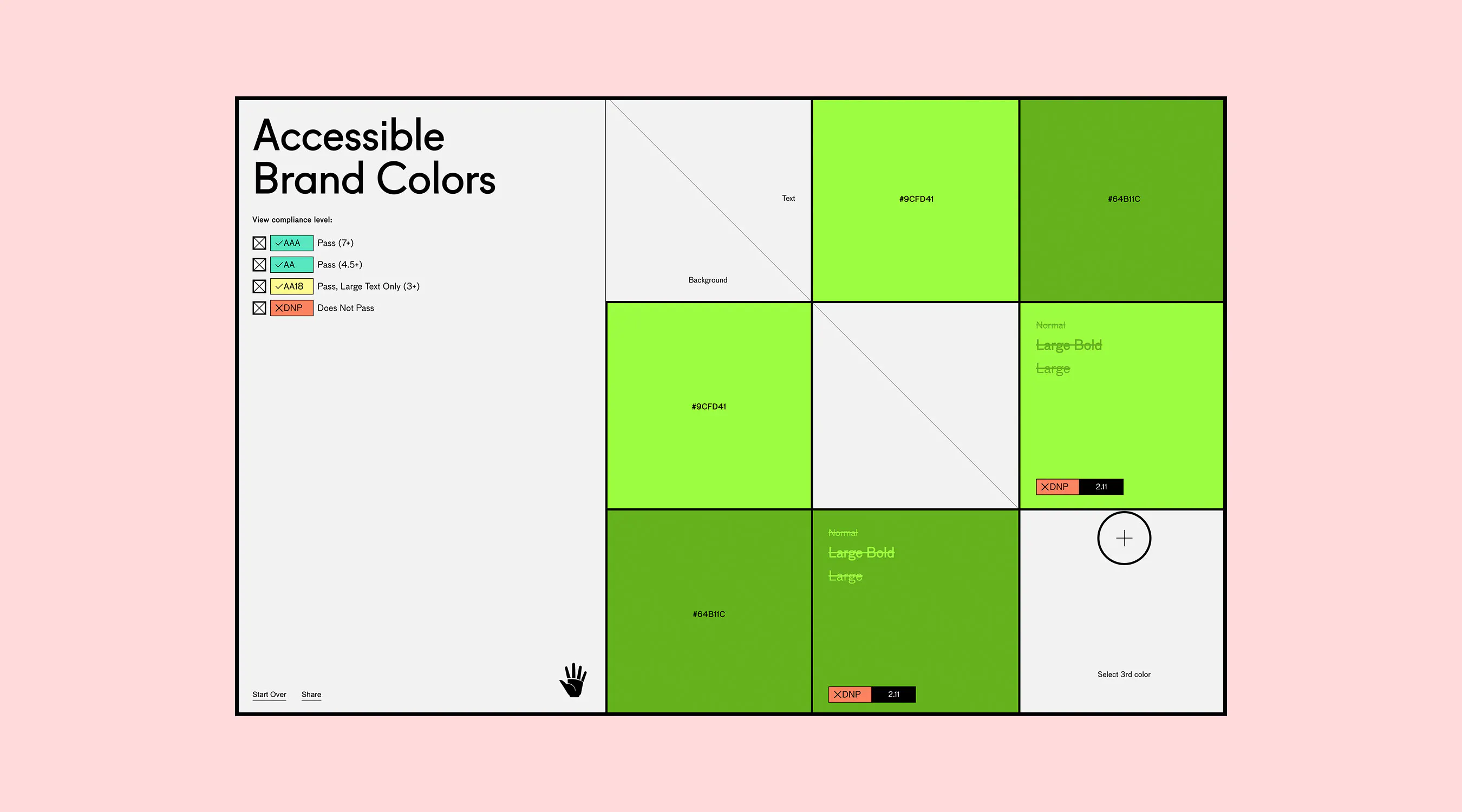
Accessible Brand Colors (ABC) is a free web tool that evaluates whether a brand's color palette meets ADA accessibility standards.
You enter your colors; it tells you which combinations are legible, which fail, and why. We built it years ago, well ahead of the curve — back when accessibility was treated as a compliance afterthought rather than a design fundamental. We needed a fast way to pressure-test palettes against contrast requirements on real client work, the existing options were clunky, so we made our own and gave it away. It's still live. People still use it. And it still does the job it was built to do, which tells you something about building from a clear opinion rather than a trend: the work outlasts the moment it was made for.
ABC is the oldest answer to the question this whole post is about. It established the pattern. The next two extend it.
Zhuzh: when the broken process is your own
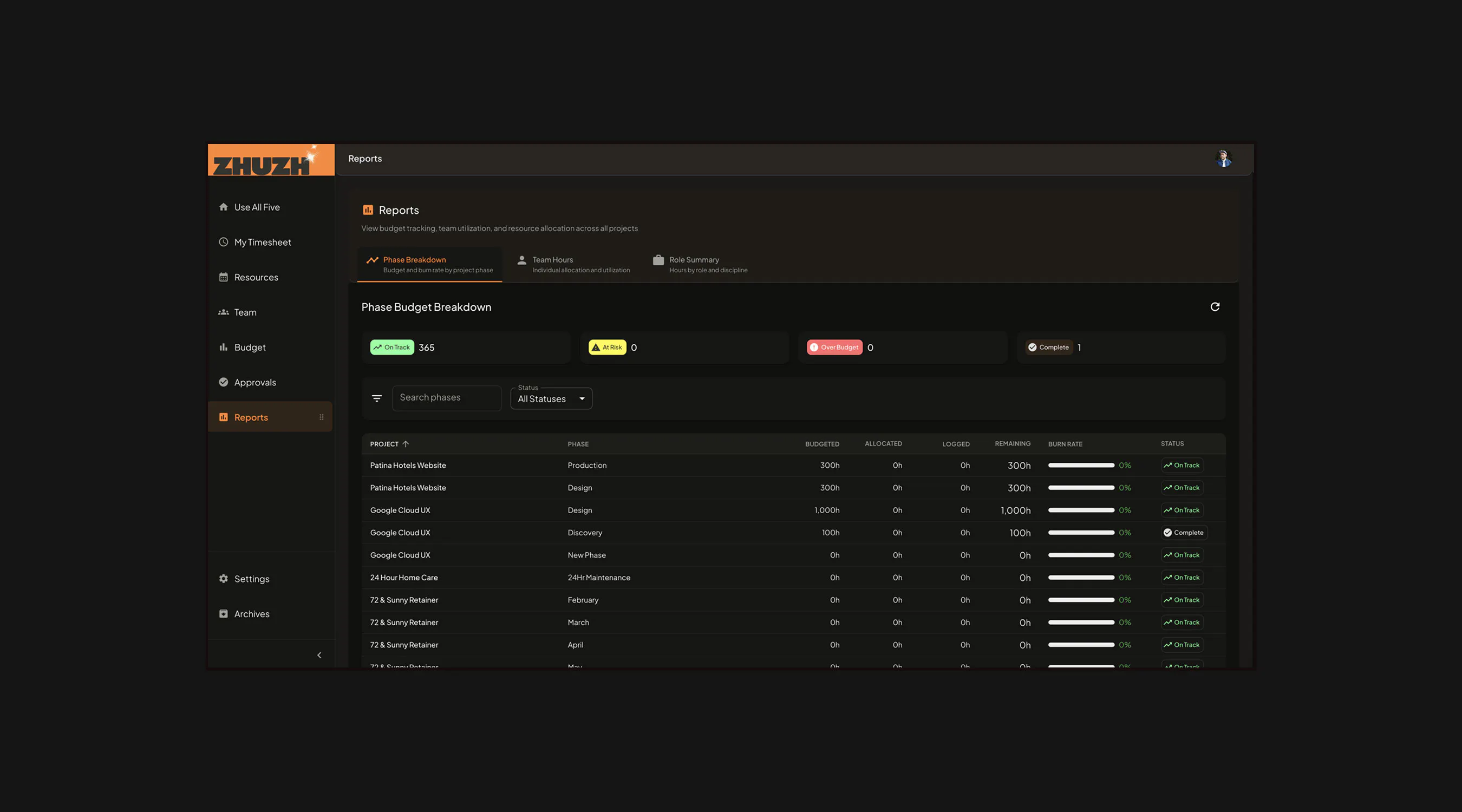
Some products solve a client's problem. Some solve yours. We built Zhuzh to fix our own resourcing — a Slack-first tool that swaps daily time tracking for a single weekly confirmation, built on the belief that scheduling software should earn trust, not erode it. Instead of asking a 30-person studio to reconstruct their week hour by hour, it asks one thing each Friday: confirm what was planned, flag what changed.
Trust the plan, confirm the exceptions, stay where people already work. It's part of a pattern at Use All Five: when an internal process is broken, we'd rather design the right tool than live with the wrong one. The same instinct that produced a public accessibility tool produces an internal one — and, when the opportunity is big enough, a product for the world. That brings us to Patina.
Patina: the expert eye, in your pocket
Here's a problem almost everyone has and almost no one can solve: you're holding something — a chair at an estate sale, a jacket at the thrift store, a box from your grandmother's attic — and you have no idea what it is or what it's worth. For most of history, answering that took a trained eye and years of market knowledge. A specialist. Someone who'd worked the auction houses long enough to know a real signature from a reproduction at a glance.
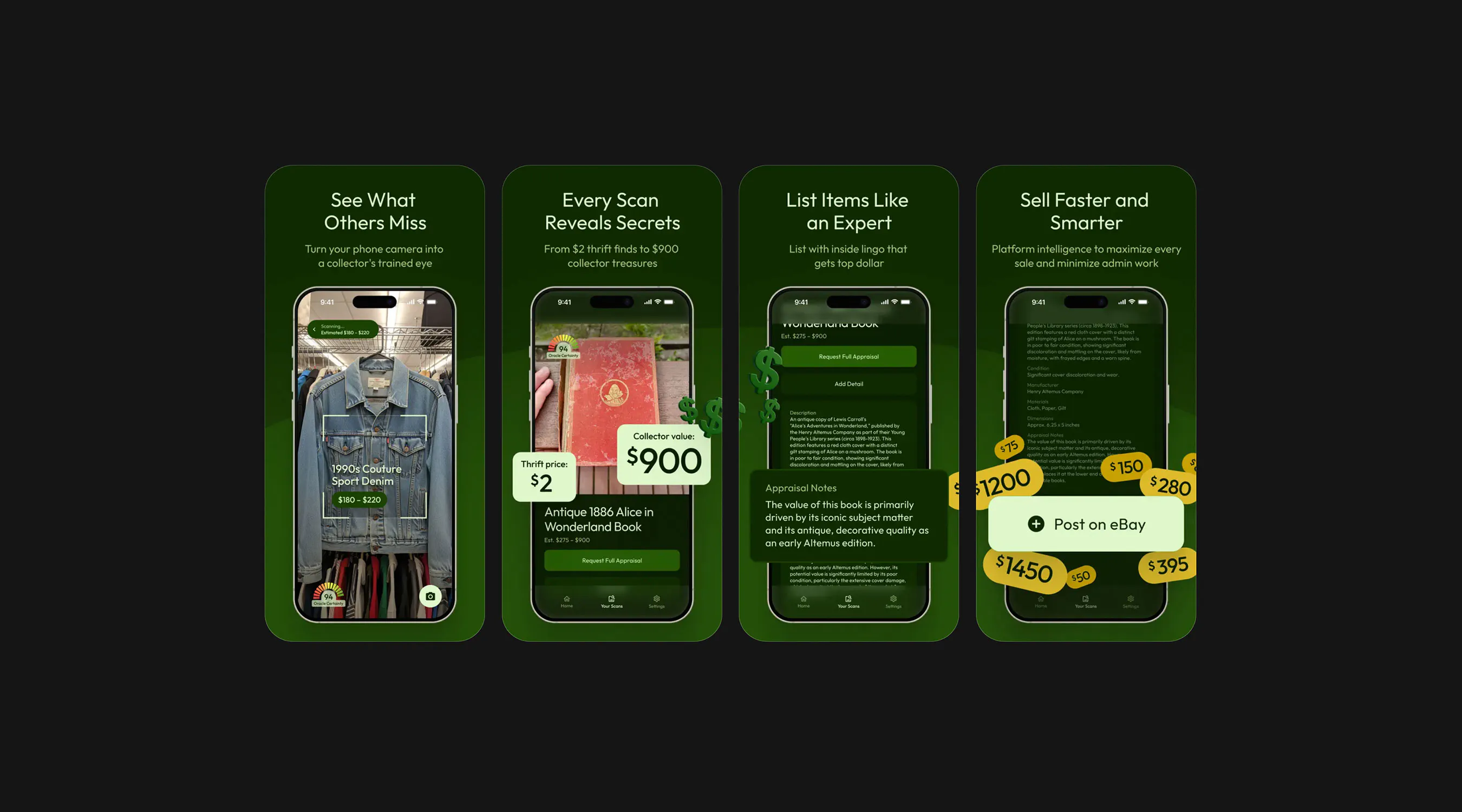
Patina is an AI app that identifies any object from a photo — its maker, era, and materials — and tells you what it's actually worth based on real market sales. Point your camera at something. Patina recognizes it, dates it, assesses its condition, and shows you what comparable pieces have sold for. When you're ready to part with it, it can even draft the listing. It's the fullest version of the instinct behind everything on this page. We saw a gap — expertise locked behind expertise — and had an opinion about how it should feel to close it. Not a price-checker for resellers. Something quieter and broader: a way for curious people to discover the value hiding in the things around them.
The mission is discover value in everything. The promise is simpler: see what collectors see. People who use it tend to fall for it. The challenge now is a happy one — getting it in front of more of them. If you've ever wondered what something is really worth, it's the easiest way to find out.
What ties them together
Notice a gap. Form a strong opinion about the right answer. Ship a real app that embodies it. That's the sequence, whether the output is a free accessibility tool, an internal Slack app, or a consumer product with paying subscribers. It's also, not coincidentally, exactly what we do for clients — except when we build for ourselves, there's no one to convince but us.
The opinion has to be right, and the thing has to actually work, or we're the ones living with it. That's the standard we bring to the work we make for everyone else, too.